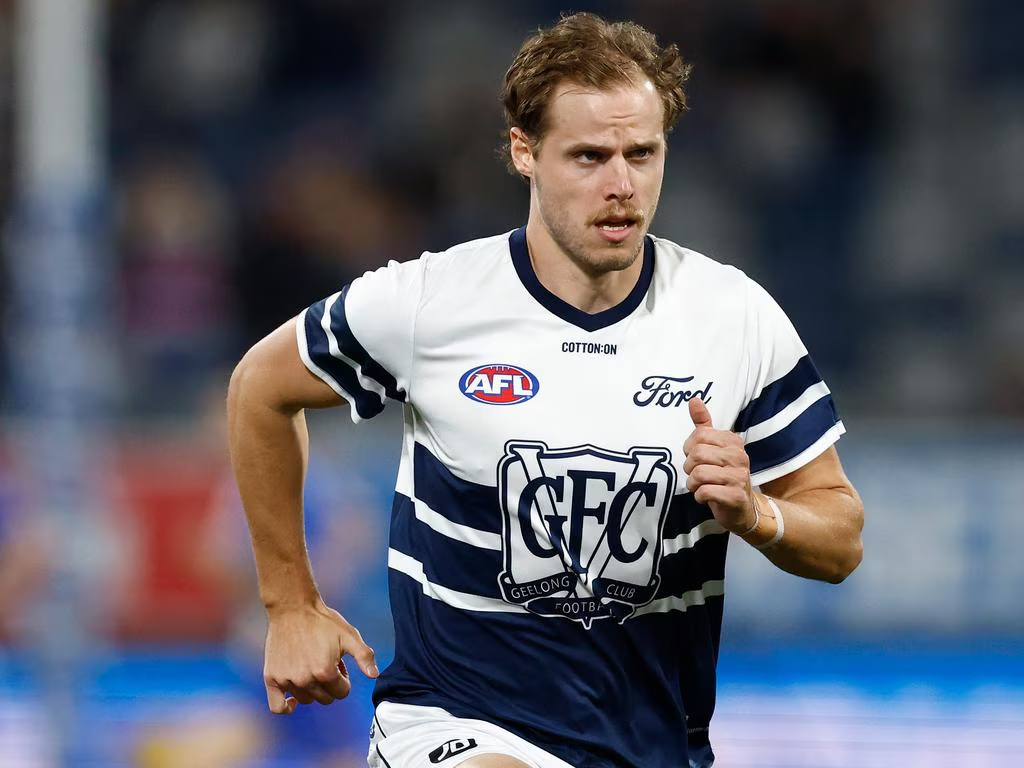
Geelong is facing a significant financial penalty and a rare public rebuke from the AFL after it emerged the club had asked defender Jake Kolodjashnij to sign a waiver releasing it from legal liability over future head knocks.
The document, agreed in early 2024, saw Kolodjashnij take on legal responsibility for the effects of any future brain trauma, in what the club has since conceded “went further than was intended” (AFL.com.au). Crucially, neither the AFL nor the AFL Players’ Association was told the arrangement existed, despite it having sat in place for close to two years.
Kolodjashnij himself came forward to confirm he was the player at the centre of the story, telling media he had signed the agreement after being cleared to return by the club’s concussion panel and wanted to keep playing (AFL.com.au; SEN). Geelong chief executive Steve Hocking has since taken personal responsibility for failing to notify the governing bodies, and the club has now removed the waiver clause from Kolodjashnij’s contract altogether.
The AFL has issued Geelong with a formal “please explain” letter, and reporting from SEN suggests the club is bracing for a financial sanction that could exceed $100,000 (SEN). AFL chief executive Andrew Dillon has publicly addressed the matter, and the league and the AFLPA have jointly declared that any future arrangement affecting a player’s legal rights must be approved by both bodies before it can be put in place.
The AFLPA’s response has been particularly pointed. Chief executive James Gallagher said bluntly that a document of this kind “should not exist,” reflecting the union’s broader concern that individual waivers could set a precedent undermining collective player protections around concussion – an issue that has dogged the AFL for years amid mounting scientific evidence linking repeated head trauma to conditions such as chronic traumatic encephalopathy (CTE).
The scandal has also drawn comment from rival figures within the game. Western Bulldogs coach Luke Beveridge weighed in on what ESPN described as a “bombshell” case, adding to scrutiny of both Geelong’s governance and the AFL’s oversight of player medical and contractual arrangements more broadly (ESPN).
For now, Geelong has removed the offending clause, but the episode has reopened uncomfortable questions about how far clubs might go to manage concussion liability behind closed doors – and whether the AFL’s existing protocols are robust enough to catch it when they do.
Sources: