Revolutionary concussion drug found to speed up brain healing in world-first trial – Weekend Australian
A revolutionary drug trial involving amateur footballers has shown the first medication capable of accelerating brain injury recovery could transform concussion treatment.
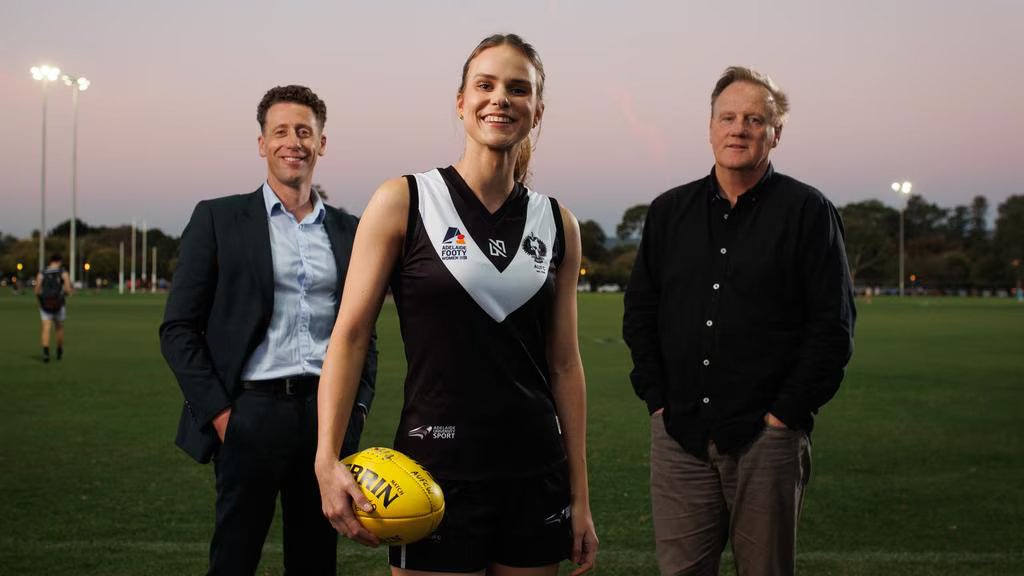
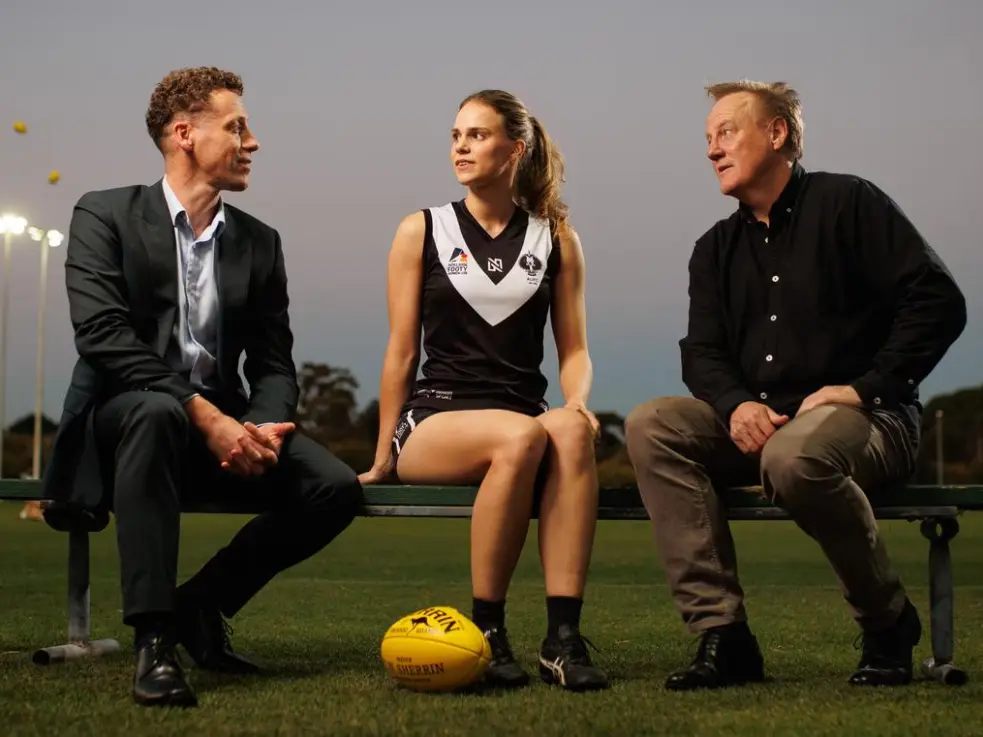
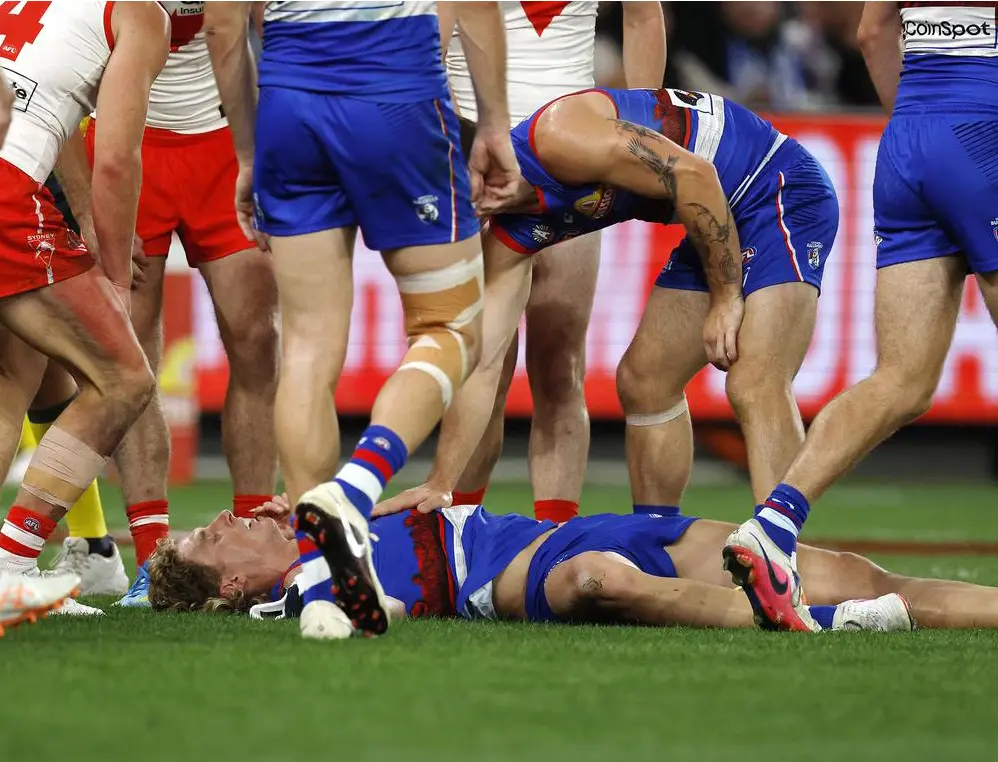
Olivia Gerhardy went in for the ball and came up seeing stars. Playing her seventh season of Australian football with the Adelaide University Blacks A-grade women’s team, the young lawyer has the haziest memory of what happened when she suffered her first concussion last July.
“All I really remember is that I got sling-tackled by the opposition and smashed headfirst into the ground,” Gerhardy told The Australian. “I couldn’t get up off the ground by myself. I was really disoriented and in a lot of pain. I was just grabbing my head and the trainer had to help me off. I’d had a few head knocks before, but I’d never been properly concussed like this. It was pretty scary.”
For all the advances of modern science the treatment of concussion remains as primitive as telling sufferers to take it easy and have a bit of a lie down. There has never been a medication that can immediately reduce the effects of head injury by encouraging the brain to put its foot to the floor and start healing itself.
That may be about to change, thanks to a groundbreaking collaboration in South Australia involving hundreds of grassroots footballers, a group of world-class medicos and a giant of footy who has now devoted himself to tackling the biggest health challenge and legal threat facing contact sports worldwide.
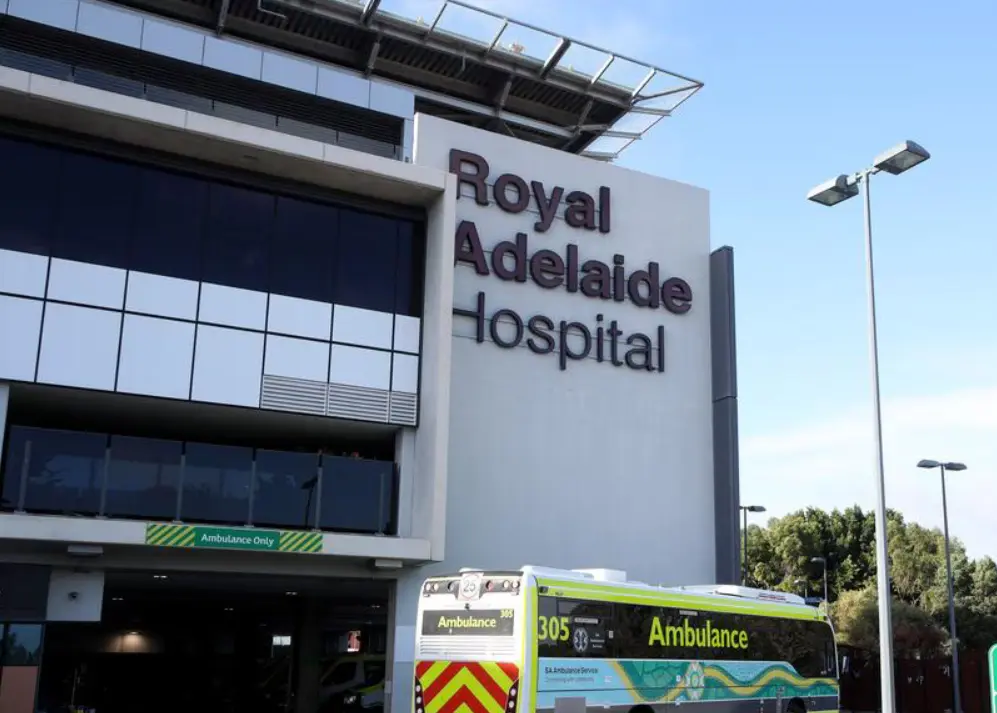
Under a trial involving brain and trauma specialists at the Royal Adelaide Hospital and some two dozen amateur clubs, players such as Gerhardy are taken the day they are injured into ICU-standard care at the RAH and administered a revolutionary drug developed by US-based Astrocyte Pharmaceuticals which escalates the brain’s capacity to heal.
The players are taken to the RAH within six hours of being injured, given the Astrocyte medication, then remain overnight for monitoring. They return for follow-up assessment on days two, six, 13 and 20 to assess their brain biomarkers and symptom recovery.
It is early days, but this is the first time a medication that will ultimately be available in tablet form has proved effective in accelerating recovery from brain injury, hopefully lessening its longer-term impact.
Keith Thomas achieved a rare feat in becoming a legend of both the Norwood and Port Adelaide football clubs, their bitter silvertails-versus-fibros rivalry having shaped the history of South Australian football. He is one of only three players to notch more than 300 games for Norwood, the others being Michael Aish and Garry McIntosh, Thomas’s teammates in Norwood’s legendary 1984 premiership win over their hated Port rivals.
In a move that left Norwood fans aghast, Thomas charted a second impressive career as the long-serving chief executive of the Port Adelaide AFL club, working alongside club president David Koch to reverse Port’s financial woes, drive lagging memberships and secure repeat finals appearances. But as a lad who got his start with “The Raggies”, the Athelstone Football Club in Adelaide’s east, his passion remains for grassroots football and making it safer for kids and young people to play.
It’s the thing that led Thomas to unite with former Sturt footballer David Wark to found their company Spark in 2021, which stands for Sport and Real Knowledge, with the mission to “harness the power of science to protect the sports we love”.
Quite deliberately, the concussion trials Spark is supporting are being done with no input from the AFL or any major football league. Thomas is determined to ensure that from their inception they are community-focused and medically led.
Thomas and his team of crack medicos have spent many evenings addressing coaches, trainers and players about the workings of the RAH/Astrocyte trial, securing the involvement of clubs from Goodwood Saints to Port Districts, Tea Tree Gully to Kilburn, Pulteney and Hope Valley, as well as Thomas’s old club, Athelstone.
“There is a very different attitude at the community level of the game than at the elite level in regards to concussion,” Thomas told The Australian.
“I think it’s because the clubs at the community level are directly in touch with the mums and dads who are making the decision as to whether their kids should play sport, and whether it is safe.
“At the AFL level those things are gone. You are in the system. But at a club like the Goody Saints you are talking to the concerned mum who is beside herself about the fact that her kid has just been knocked out.
“The issue of safety is much more personal and it begs the question: is there anything more that we can do here? That’s why the willingness of these clubs and the players and families to get involved is amazing. We are talking to 5000 players who are saying: ‘I get it.’ It is a remarkable thing, but it only happens because they have a choice to make: do I play or not play?”
Thomas is joined at these football club presentations by renowned sports physician Damian Newberry and research and medical adviser Mark Plummer, the Adelaide University and Cambridge-educated head of research and innovation at the Royal Adelaide Hospital ICU.
As a frontline doctor who has seen multiple catastrophic brain injuries, Associate Professor Plummer couldn’t be more excited about the Astrocyte trial, believing it could also have applications for strokes and degenerative conditions.
“There is huge potential here not just for sport and football but for brain injury more generally,” he said.
“For concussion, up until this point, all we have had is rest to give them time to recover. This is the first thing I’ve seen with a potential treatment to improve the brain function after a concussion. It looks like it acts very quickly, within hours.
“The data have seen from the lab is very exciting, both the way that it works and the speed with which it works.”
The person who pioneered the development of the Astrocyte drug is former Pfizer vice-president Bill Korinek, a Boston-born, Harvard-educated fan of the New England Patriots who played college football himself.
Dr Korinek has stark but fuzzy memories of being “de-cleated” – left with his sprigs, or cleats, pointing upwards – after being knocked out playing gridiron at college.
“All I remember is a flash here, a flash there, and looking up seeing helmets,” he said.
Dr Korinek co-founded Astrocyte Pharmaceuticals in 2014 and travelled to Adelaide last month where he saw a Norwood-Sturt game in the SANFL with Thomas and also met some of the young footy players who have signed on enthusiastically to test the drug he has pioneered.
“In our testing, we went from mice to rats to pigs to monkeys, and now to people, and the drug just continues to do great things in helping to protect the brain after these injuries,” Dr Korinek said.
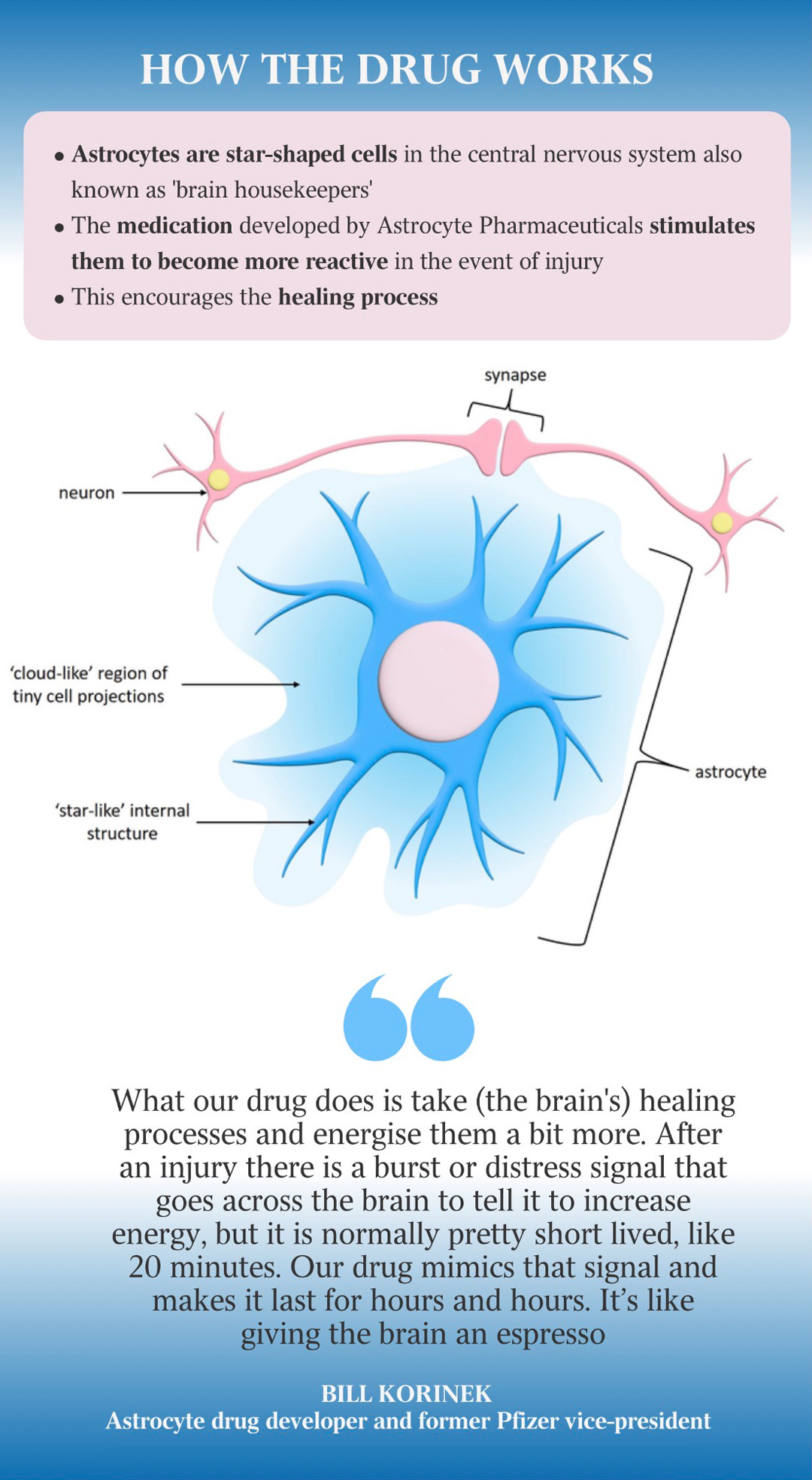
“We knew this was a huge opportunity. There’s no treatments so this is a very novel way to come at it. Normally people are just trying to change the neuronal chemistry a little bit. We are going after the support cells, the astrocytes, to help them do a better job. If you help them, they help the rest of the brain.
“The brain does have a tendency to be able to heal itself. From a small bump or concussion the brain can heal itself through rest and time. But if you get something more severe or repetitive concussion or stroke, the brain can’t keep up or heal from those bigger injuries.
“What our drug does is take those healing processes and energise them a bit more. After an injury there is a burst or distress signal that goes across the brain to tell it to increase energy, but it is normally pretty short lived, like 20 minutes. Our drug mimics that signal and makes it last for hours and hours. It’s like giving the brain an espresso.”
Dr Korinek said early indications were that the time for injured players to recover, instead of weeks, is in some cases now days, raising the prospect of future debates around the length of existing concussion protocols.
But he cautions that the intention of the medication is not to get star players back on the park in record time, but the more important job of preventing brain damage.
“We do want to accelerate the return to work and the return to play, but we want to do it in a responsible way,” he said.
“They aren’t just going right back into battle because they have taken a tablet.”
The man overseeing the trial is neuroanesthesiologist Guy Ludbrook, who runs the unique unit at the RAH providing ICU-level care for patients and volunteers testing promising drugs in a safe environment.
Professor Ludbrook said the size, geography and sporting and medical traditions of Adelaide made it the perfect city to conduct the trial, with all the football clubs taking part less than an hour’s drive from the RAH.
“There are thousands of people playing footy here every weekend with a high incidence rate of concussions,” Professor Ludbrook said.
“Every weekend we know we are going to get people having concussions. So we can set up a central location and treat these players as they come in. It is a unique set of circumstances because these are patients who now have an illness they didn’t have an hour ago.
“In the past we would provide comfort for them, pain relief and rest. But that is really limited. Now what happens is they come to us and not only get access to this drug, but care in a hospital in a very supportive environment with specialist doctors and IC nurses to look after them.
“We see a lot of early-phase drugs that might be protective in mice, but this drug is at a whole different level for neuro-protective or neuro-healing drugs. This is really a big step ahead of what we have seen. It’s a promising drug with world-class care, and a football community that is prepared to jump in and get involved.”
Despite her head knock, Gerhardy is back playing footy and laughs that pretty much nothing would stop her.
Speaking at training at the Blacks’ home base at Park 12 this week, she told The Australian she was pleased to have taken her role in a clinical trial that could change contact sports for the better.
“It took a couple of months to be feeling completely back to normal,” she said. “Sleeping was a problem, concentrating at work was harder, I was getting headaches.
“I was shown my results and you could see that after the drug was administered that it had really curbed things from getting worse.
“I’d been pretty lucky, I guess, in that it had never happened in seven years of playing football. This one was pretty substantial. This was the first time I thought, far out, this is really bad.
“But I got through it, and I was happy to be part of a trial that can hopefully make footy safer for everyone else too.”
Article courtesy: David Penberthy (The Australian).
Pictures: Matt Turner, Kelly Barnes, Michael Klein